Thursday, June 17, 2021

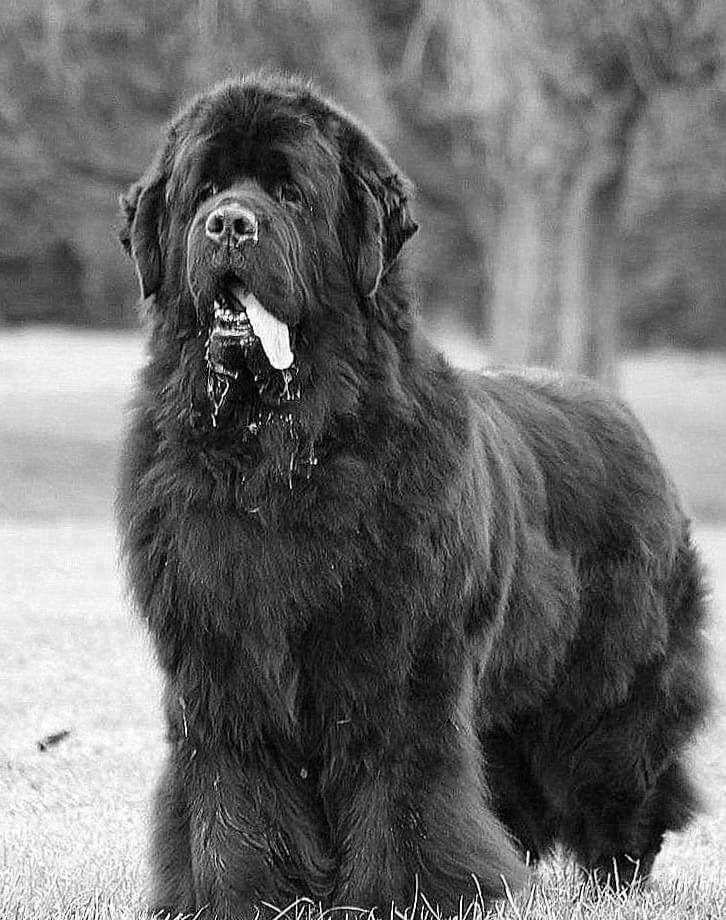
The Newfoundland Dog - "Breed Character"

"Many breed standards suggest that quality known as 'Breed Character' – all those characteristics that blend together to create the ideal. Those characteristics in total should separate the Newfoundland from all the other working breeds. Any blends that remind a judge of other breeds are not correct for the Newfoundland. When any breed begins to look like another breed, it is wrong for its breed.”
Ronald Pemberton (1998)

Wednesday, June 9, 2021

Andrew - Karazan Music Of The Night

A Note To Andrew (An Ode To Jack) Sometimes I look for traits in you Of a great big dog you never knew....... A dog that loved me all his days And understood in special ways. But that's not fair to you, Andrew; You're not a substitute; but yourself! You've eased the loss, soothed the pain And tugged my laughter home again. Yet, "Puppy", at times I almost start When your eyes recall him to my heart You'll never lack for love, it's clear Because of him, you're twice as dear. Forever. For always.

Monday, May 31, 2021

Remembering Sergeant Gander

(Veterans Affairs - Canada) Sergeant Gander was a Newfoundland dog, and was raised by the Hayden family on the airport base in Gander, Newfoundland. He was a friendly dog who loved playing with children. He pulled them on their sleds and kids watched him drool—Newfoundland dogs drool a lot!—He enjoyed living on the base but spent too much time on the runways, trying to catch the planes as they came in to land.
One day, because he was growing to be so large, the Hayden family decided to give the playful dog to the Royal Rifles of Canada Regiment. He quickly became a good friend and mascot for the soldiers of the regiment.
Taking care of Gander was a pleasant duty. During wartime the friendship of a dog reminded many of the men of pets and family at home. Gander was a mascot, but he was also seen as a fellow soldier with a job to perform. He would bark and nip at the legs of the enemy, scaring them away. One night in December 1941, Gander showed his true courage. In 1941, the Royal Rifles of Canada Regiment was sent to Hong Kong to defend the land from an enemy invasion. The men didn’t want to leave Gander behind, so they gave him the rank of “Sergeant” and he boarded the troopship with his fellow soldiers.
During his time as their mascot, Gander proved his value more than once. There are at least three documented instances of Gander protecting the troops. The first was when a wave of attackers landed on the beach and Gander rushed at them barking and charging at their legs. The second instance occurred at night. There was a group of injured Canadians laying on the road and as a group of Japanese soldiers advanced towards them, Gander flew at them, causing them to change direction.
He was a smart dog—he knew what a grenade was and how it could hurt people. That night, Gander saw a grenade tossed near a group of wounded Canadian soldiers. He ran to it, took it, and rushed away with it. The grenade exploded and Gander was killed. But he had saved the lives of the seven soldiers! Those men never forgot Sergeant Gander.

Tuesday, May 25, 2021

Satchie - Happy Birthday In Heaven

Happy Birthday in Heaven "I wish you were here today even for just a little while so I could say Happy Birthday 'Satchie' and see your beautiful smile. The only gifts today will be the gifts you left behind; The laughter, joy and happiness... precious memories...the best kind. Today I'll do my very best to try and find a happy place... struggling to hide my heavy heart and the tears on my face. I'll sit quietly and look at your picture thinking of you with love; hoping you're doing ok in Heaven up above. May the angels hold you close and sing you a happy song... and I'll be sending wishes to you today and all year long." Bless you Satchie, my compass star.

Saturday, May 22, 2021

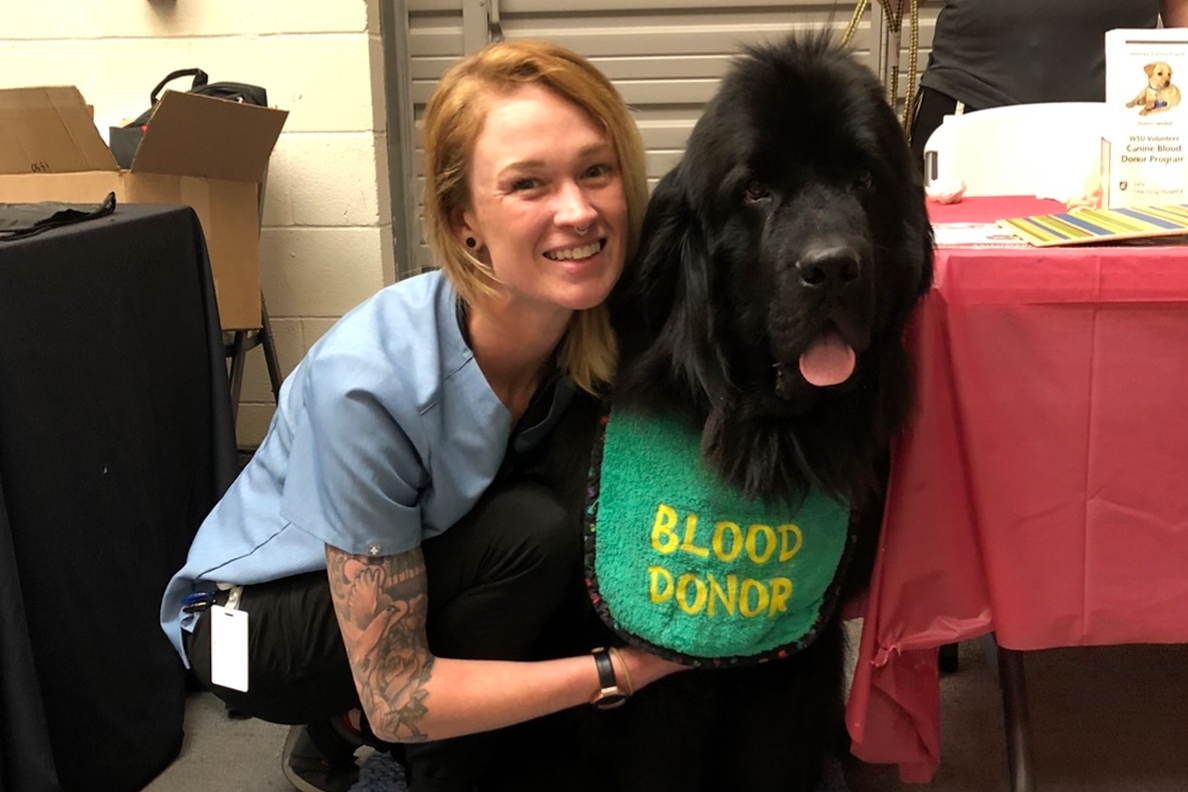
Larry The Newfoundland Dog - Saving Lives In A Different Way

(By Devin Rokyta, College of Veterinary Medicine - Washington State University) Larry is the typical Newfoundland dog – big, cuddly, and friendly.
He is a social butterfly and is always up for a tasty treat, napping, or swimming. He also loves his frequent visits to Washington State University’s Veterinary Teaching Hospital, where, whether he knows it or not, he is saving the lives of other dogs as a volunteer blood donor. “Everybody at the veterinary hospital knows his name and wants to give him attention,” said Sarah Huston, who is Larry’s owner, best friend, and a licensed veterinary technician at the hospital. “I don’t know if he knows he is the life-saver he is, but he knows he is doing good stuff when he goes to the hospital.” Since the donor program began more than three decades ago, the veterinary hospital’s blood bank has made it possible to perform thousands of transfusions and save the lives of countless dogs and cats. “Last week, we probably would have had two patients die without using blood,” said Dr. Jane Wardrop, director of the blood bank and the veterinary hospital’s Clinical Pathology department. “It would be very sad to not be able to supply these animals with what they need. This program saves lives. It really does.” Wardrop typically works with a team of four veterinary students and a donor base of 20 dogs and a handful of cats. The students are trained to manage donors and handle collections and processing. Each hopeful volunteer must go through a litany of tests to ensure it is healthy and that it has the proper temperament. Dogs must be 1-6 years old, weigh at least 60 pounds and be able to lie still on a table for 10 minutes while blood is being collected. Cats, which are sedated during collections, must be 1-6 years old and weigh at least 10 pounds. Pet owners are asked to commit to the program for at least two years. Dog volunteers typically make donations every two months, while cats can donate every three months. “We want dogs that are happy to come here, that look forward to it, that wag their tail when they go in that transfusion room,” Wardrop said. “They get a lot of praise and belly rubs – stuff you wouldn’t do with a person giving blood.” In addition to knowing their pet is saving the lives of other dogs and cats, pet owners also get a handful of perks, including free Purina dog or cat food thanks to the program’s longstanding partnership with Nestlé Purina PetCare. “Purina has been gracious enough to provide their food for donors in our program, and we can’t thank them enough for their partnership and help with this program,” Wardrop said. Avi Shaprut, veterinary communications manager at Nestlé Purina PetCare, said Purina is proud to have the opportunity to provide high-quality food to donors. “These owners have committed their pets to serving a higher purpose in providing lifesaving blood to help other pets survive during times of dire need,” Shaprut said. “Our Pro Plan diets provide protein and nutrients to help these heroes thrive and be able to donate again at a suitable time. As such, this now longstanding partnership with this impactful program just makes sense.” The food is just a small thank you to the blood donors and their owners who make such a difference. “A lot of our critical care and emergency patients,” Huston said, “they wouldn’t go home to their families without these life-saving donations that our blood donors provide.”