Sunday, October 23, 2022
I Am Your Dog

Sunday, October 16, 2022

Sunday, October 9, 2022
This Newfoundland Is Training To Be A Lifeguard
(akc.com - August 2022)
 If you find yourself at Maine’s Scarborough Beach State Park this summer, you might be greeted by a very special trainee lifeguard: a 16-month-old Newfoundland named Beacon. A group of committed Newfoundland enthusiasts, including Beacon’s owner Greg Wilfert, is working to train more Newfoundlands as canine lifeguards.
Natural Ability:
Wilfert is a lifeguard at Scarborough Beach State Park, and Beacon accompanies him to work. Dog lifeguard training began early for this puppy. Wilfert explained that when Beacon was 12 weeks old, she started greeting the public at the park. At five months old, she began her formal training. He sees Beacon as “another important tool to keep the public safe.” Beacon trains daily on land and in the water from June to August.
If you find yourself at Maine’s Scarborough Beach State Park this summer, you might be greeted by a very special trainee lifeguard: a 16-month-old Newfoundland named Beacon. A group of committed Newfoundland enthusiasts, including Beacon’s owner Greg Wilfert, is working to train more Newfoundlands as canine lifeguards.
Natural Ability:
Wilfert is a lifeguard at Scarborough Beach State Park, and Beacon accompanies him to work. Dog lifeguard training began early for this puppy. Wilfert explained that when Beacon was 12 weeks old, she started greeting the public at the park. At five months old, she began her formal training. He sees Beacon as “another important tool to keep the public safe.” Beacon trains daily on land and in the water from June to August.
 Much of her training has been with the American Academy of Canine Water Rescue. AACWR’s president and founder, Maria E. Gray, Ph.D., notes that “Beacon is an incredible young Newfoundland dog.” A fast learner, Beacon has shown a natural aptitude and interest in being a water rescue dog.
“Beacon has amazing drive and rapidly took to the basic water work exercises. She was with us for 45 days and then returned to work with Greg on his beach,” Gray explains. Then for the next stage of her training, “three head instructors from the Academy traveled to the beach in Maine where Greg and Beacon work to train with several other water rescue dogs,” Gray explains. Throughout, Beacon’s drive for the work has increased.
A Lifesaving Legacy:
Using Newfoundlands as part of a lifeguard team helps preserve these giant pups’ working nature. Historically, Newfoundlands were Canadian fishermen’s working dogs. Newfoundlands were bred to pull fishing nets and boats, and to be strong enough to save adults from drowning. Their natural swimming ability makes this breed a natural choice for the AACWR.
Gray says, “They are ideal for water rescue work due to their triple coat, with a layer like goose down close to their skin and an outer coarser layer of fur. This helps their skin to stay relatively dry and allows them to swim in very cold water if needed. They have webs between their toes, which helps their powerful paws to swim and they don’t do a ‘doggie-paddle’—they reach out with their front paws. Their large, droopy jowls allow them to hold a rope or a line in their mouth, while swimming, as it permits the water to pour out the sides of their mouths.”
Much of her training has been with the American Academy of Canine Water Rescue. AACWR’s president and founder, Maria E. Gray, Ph.D., notes that “Beacon is an incredible young Newfoundland dog.” A fast learner, Beacon has shown a natural aptitude and interest in being a water rescue dog.
“Beacon has amazing drive and rapidly took to the basic water work exercises. She was with us for 45 days and then returned to work with Greg on his beach,” Gray explains. Then for the next stage of her training, “three head instructors from the Academy traveled to the beach in Maine where Greg and Beacon work to train with several other water rescue dogs,” Gray explains. Throughout, Beacon’s drive for the work has increased.
A Lifesaving Legacy:
Using Newfoundlands as part of a lifeguard team helps preserve these giant pups’ working nature. Historically, Newfoundlands were Canadian fishermen’s working dogs. Newfoundlands were bred to pull fishing nets and boats, and to be strong enough to save adults from drowning. Their natural swimming ability makes this breed a natural choice for the AACWR.
Gray says, “They are ideal for water rescue work due to their triple coat, with a layer like goose down close to their skin and an outer coarser layer of fur. This helps their skin to stay relatively dry and allows them to swim in very cold water if needed. They have webs between their toes, which helps their powerful paws to swim and they don’t do a ‘doggie-paddle’—they reach out with their front paws. Their large, droopy jowls allow them to hold a rope or a line in their mouth, while swimming, as it permits the water to pour out the sides of their mouths.”
 In addition, Newfoundlands “have tremendous endurance and can swim for miles; they can pull thousands of pounds in the water,” explains Gray. Other breeds like Labrador Retrievers work as water rescue dogs, and Gray notes that any dog of the right size with a strong bond to their handler and a drive to work can be trained to do water rescue.
Water rescue dogs primarily serve “as a force-multiplier, allowing the human first responder to conserve their energy for when it is truly needed,” she adds. When working Newfoundlands are deployed alongside a lifeguard, “the dog can pull up to 50 times its body weight in the water, so can be utilized to tow a small boat with passengers if needed.”
Canine safety is a priority. “The dogs utilize a specially designed harness which serves as a PFD (personal flotation device) for the dog and allows the lifeguard to ‘ride’ the dog, holding onto handles, which permit a trained dog to be steered,” Gray says.
Training Water Rescue Dogs:
A lot of training goes into preparing a dog for professional water rescue work. Gray notes that candidates “must have a deep bond with his/her primary handler, basic obedience skills, and a gentle disposition. The dog must exhibit drive and should have joy in working. We seek out dogs that display overt friendliness to humans, even strangers. Dogs that are highly motivated through positive training techniques to learn new skills.”
Gray advises that it usually takes anywhere from one to three years before dogs can conduct a rescue with a first responder. Water rescue dogs are continuously training through their working careers. The Academy utilizes what Gray describes as an “instructor dog” to teach student canines more efficiently and effectively. She adds, “There is the human trainer, but we demonstrate to the new dog with one of our top instructor dogs. The dogs can learn from other dogs.”
Helicopter Rescues:
The AACWR completed its first helicopter deployment training exercises in July 2022. In this mock rescue, highly-trained Newfoundlands jumped out of helicopters to reach people simulating being in distress. Gray says that the AACWR enlisted “our top two instructor dogs” who were capable of doing land to water rescues, which start from the shore with a lifeguard to a person/s in distress, and water-water rescues, which involve “deploying from various types of water crafts.” In advance of this training exercise, the AACWR had trained the pups to fly on helicopters. This included boarding and unloading while the helicopter was on.
The AACWR puts significant time and effort into training the dogs to be comfortable around loud sounds and distractions prior to their first flights. The organization conducts these mock rescues in the same style as the Italian School of Water Rescue Dogs, which utilizes Newfoundland helicopter deployments from helicopters as part of working water rescue efforts.
Beacon Loves Her Public:
When she’s not working, Beacon is a beloved pet and friend to Wilfert. During the summer, the two live across from the beach, and in the winter, they call Carrabassett Valley home.
Wilfert explained that Beacon is “a people’s pup.” Extremely outgoing and friendly, Beacon also takes her water rescue work very seriously. If you find yourself at Scarborough State Park, Wilfert encourages you to approach him and ask to meet Beacon. “We encourage meeting and petting; Beacon loves her public!” he says.
In addition, Newfoundlands “have tremendous endurance and can swim for miles; they can pull thousands of pounds in the water,” explains Gray. Other breeds like Labrador Retrievers work as water rescue dogs, and Gray notes that any dog of the right size with a strong bond to their handler and a drive to work can be trained to do water rescue.
Water rescue dogs primarily serve “as a force-multiplier, allowing the human first responder to conserve their energy for when it is truly needed,” she adds. When working Newfoundlands are deployed alongside a lifeguard, “the dog can pull up to 50 times its body weight in the water, so can be utilized to tow a small boat with passengers if needed.”
Canine safety is a priority. “The dogs utilize a specially designed harness which serves as a PFD (personal flotation device) for the dog and allows the lifeguard to ‘ride’ the dog, holding onto handles, which permit a trained dog to be steered,” Gray says.
Training Water Rescue Dogs:
A lot of training goes into preparing a dog for professional water rescue work. Gray notes that candidates “must have a deep bond with his/her primary handler, basic obedience skills, and a gentle disposition. The dog must exhibit drive and should have joy in working. We seek out dogs that display overt friendliness to humans, even strangers. Dogs that are highly motivated through positive training techniques to learn new skills.”
Gray advises that it usually takes anywhere from one to three years before dogs can conduct a rescue with a first responder. Water rescue dogs are continuously training through their working careers. The Academy utilizes what Gray describes as an “instructor dog” to teach student canines more efficiently and effectively. She adds, “There is the human trainer, but we demonstrate to the new dog with one of our top instructor dogs. The dogs can learn from other dogs.”
Helicopter Rescues:
The AACWR completed its first helicopter deployment training exercises in July 2022. In this mock rescue, highly-trained Newfoundlands jumped out of helicopters to reach people simulating being in distress. Gray says that the AACWR enlisted “our top two instructor dogs” who were capable of doing land to water rescues, which start from the shore with a lifeguard to a person/s in distress, and water-water rescues, which involve “deploying from various types of water crafts.” In advance of this training exercise, the AACWR had trained the pups to fly on helicopters. This included boarding and unloading while the helicopter was on.
The AACWR puts significant time and effort into training the dogs to be comfortable around loud sounds and distractions prior to their first flights. The organization conducts these mock rescues in the same style as the Italian School of Water Rescue Dogs, which utilizes Newfoundland helicopter deployments from helicopters as part of working water rescue efforts.
Beacon Loves Her Public:
When she’s not working, Beacon is a beloved pet and friend to Wilfert. During the summer, the two live across from the beach, and in the winter, they call Carrabassett Valley home.
Wilfert explained that Beacon is “a people’s pup.” Extremely outgoing and friendly, Beacon also takes her water rescue work very seriously. If you find yourself at Scarborough State Park, Wilfert encourages you to approach him and ask to meet Beacon. “We encourage meeting and petting; Beacon loves her public!” he says.


Saturday, October 1, 2022
The Story of Sergeant Gander - The Brave Newfoundland Who Sacrificed Himself in Battle to Save His Battalion
(Worldnationnews.com)
 "Thousands of people have gone down in history in war conflicts to sacrifice themselves to save families, entire communities, battalions and even nations. However, there are other lesser-known heroes who have given their lives in heroic acts worthy of recognition.
Pal, as he was named during the first months of his life, was the pet of a family who lived in the small Canadian town of Gander. Like a good Newfoundland, the dog soon began to grow and became a specimen weighing around 70 kilograms.
"Thousands of people have gone down in history in war conflicts to sacrifice themselves to save families, entire communities, battalions and even nations. However, there are other lesser-known heroes who have given their lives in heroic acts worthy of recognition.
Pal, as he was named during the first months of his life, was the pet of a family who lived in the small Canadian town of Gander. Like a good Newfoundland, the dog soon began to grow and became a specimen weighing around 70 kilograms.
 It was October 1941, and second World War was in development. The Unit of the Royal Rifles and Winnipeg Ranchers had previously been sent to war together to defend the British colony of Hong Kong from Japanese threats.
Prior to service in Hong Kong, the Royal Rifles and Sergeant Gander had served in Newfoundland and St Johns, while the Grenadiers served in Jamaica, although both squadrons had minimal training, this was not relevant at the time. It was thought that Canadians would only have garrison duty, not combat duty.
However, peace on the island was short-lived and in December the Japanese landing resulted in intense bombings against Hawaii (Pearl Harbour), as well as United States naval bases in northern Malaysia, the Philippines, Guam, Wake Island, and Hong Kong, Where were the Canadians?
As stated in the Canadian Veterans Archive, the Canadian Forces commanded 1,975 soldiers commanded by Brigadier JK Lawson, in addition to Gander and another body of nurses.
On December 19, 1941, the 1st Battalion of the Royal Rifles was cut down and the Canadians were barely able to respond to the offensive. In one such attack, a grenade fell along with the squad and bravely Gander took the explosive and quickly drove away, exploded and died instantly, but saved the soldiers.
Although the fighting ended with over 1,050 dead and wounded, the remaining survivors, including some prisoners of war, were able to return home, although this confrontation was one of the bloodiest episodes involving Canadians in World War II.
It was October 1941, and second World War was in development. The Unit of the Royal Rifles and Winnipeg Ranchers had previously been sent to war together to defend the British colony of Hong Kong from Japanese threats.
Prior to service in Hong Kong, the Royal Rifles and Sergeant Gander had served in Newfoundland and St Johns, while the Grenadiers served in Jamaica, although both squadrons had minimal training, this was not relevant at the time. It was thought that Canadians would only have garrison duty, not combat duty.
However, peace on the island was short-lived and in December the Japanese landing resulted in intense bombings against Hawaii (Pearl Harbour), as well as United States naval bases in northern Malaysia, the Philippines, Guam, Wake Island, and Hong Kong, Where were the Canadians?
As stated in the Canadian Veterans Archive, the Canadian Forces commanded 1,975 soldiers commanded by Brigadier JK Lawson, in addition to Gander and another body of nurses.
On December 19, 1941, the 1st Battalion of the Royal Rifles was cut down and the Canadians were barely able to respond to the offensive. In one such attack, a grenade fell along with the squad and bravely Gander took the explosive and quickly drove away, exploded and died instantly, but saved the soldiers.
Although the fighting ended with over 1,050 dead and wounded, the remaining survivors, including some prisoners of war, were able to return home, although this confrontation was one of the bloodiest episodes involving Canadians in World War II.
 Only a few weeks passed after the fateful day for Gander to become a legend. He was posthumously awarded the Dickin Medal on 27 October 2000. The first to be honored in 51 years, and after the Canadian War Museum, the Hong Kong Veterans Association and the Hong Kong Memorial Association advocated an award for bravery. The Dickin Medal is a equivalent to the Victoria Cross. Animals were given the award for their actions in armed conflicts and to date only 61 animals have been received the award.
His medal read: “For saving the lives of Canadian infantrymen during the Battle of Lai Mun on Hong Kong Island in December 1941. Twice Gander attacks blocked enemy advances and wounded protected groups of soldiers. In a final act of bravery, the war dog was killed while carrying a hand grenade. Without Gander’s intervention, many more lives would have been lost in the attack."
Three decades before he was awarded the Dickin Medal, and at the insistence of the surviving military, Gander was included in the Hong Kong Veterans Memorial located in Ottawa, Canada, where the names of 1,975 male and two female nurses who were part of the battalion are pending.
Finally, on 23 July 2015, a statute in honor of Gander was erected at Newfoundland Memorial Park.
Philip Dodridge, one of the former members of the Royal Rifles who was also a prisoner of the Japanese for three years, told the network, CBC: “It is very emotional, even talking about it, it is very close to my heart. He was loved by all of us, he followed us to Hong Kong and was killed in action.”
Gander’s story was also included in David Long’s book The Animals VC, For Gallantry or Devotion, which discusses the animals that have received the Dickin Medal."
Only a few weeks passed after the fateful day for Gander to become a legend. He was posthumously awarded the Dickin Medal on 27 October 2000. The first to be honored in 51 years, and after the Canadian War Museum, the Hong Kong Veterans Association and the Hong Kong Memorial Association advocated an award for bravery. The Dickin Medal is a equivalent to the Victoria Cross. Animals were given the award for their actions in armed conflicts and to date only 61 animals have been received the award.
His medal read: “For saving the lives of Canadian infantrymen during the Battle of Lai Mun on Hong Kong Island in December 1941. Twice Gander attacks blocked enemy advances and wounded protected groups of soldiers. In a final act of bravery, the war dog was killed while carrying a hand grenade. Without Gander’s intervention, many more lives would have been lost in the attack."
Three decades before he was awarded the Dickin Medal, and at the insistence of the surviving military, Gander was included in the Hong Kong Veterans Memorial located in Ottawa, Canada, where the names of 1,975 male and two female nurses who were part of the battalion are pending.
Finally, on 23 July 2015, a statute in honor of Gander was erected at Newfoundland Memorial Park.
Philip Dodridge, one of the former members of the Royal Rifles who was also a prisoner of the Japanese for three years, told the network, CBC: “It is very emotional, even talking about it, it is very close to my heart. He was loved by all of us, he followed us to Hong Kong and was killed in action.”
Gander’s story was also included in David Long’s book The Animals VC, For Gallantry or Devotion, which discusses the animals that have received the Dickin Medal."


Friday, September 23, 2022
On This Day In History - Lewis & Clark Return To St. Louis As Heroes With Their Incredible Newfoundland Dog, Seaman
(yahoonews.com - Kerry Byrne)
 U.S. Army Captain Meriwether Lewis, 2nd Lt. William Clark and their Corps of Discovery returned to St. Louis to a hero's welcome after their epic journey to the Pacific Ocean on this day in history, Sept. 23, 1806. "We were met by all the village and received a hearty welcome from its inhabitants," wrote Clark as their expedition returned to the Gateway to the West.
"We Suffered the party to fire off their pieces as a salute to the town."
Their epic continental sojourn, easily covered by air travel today in mere hours, lasted 28 months and covered 8,000 miles of an undulating route largely following the Missouri and Columbia rivers.
U.S. Army Captain Meriwether Lewis, 2nd Lt. William Clark and their Corps of Discovery returned to St. Louis to a hero's welcome after their epic journey to the Pacific Ocean on this day in history, Sept. 23, 1806. "We were met by all the village and received a hearty welcome from its inhabitants," wrote Clark as their expedition returned to the Gateway to the West.
"We Suffered the party to fire off their pieces as a salute to the town."
Their epic continental sojourn, easily covered by air travel today in mere hours, lasted 28 months and covered 8,000 miles of an undulating route largely following the Missouri and Columbia rivers.
 "What happened to the Corps is a great story, brimming with energy and full of forward motion," enthused historian James P. Ronda in a 2003 retrospective in Smithsonian Magazine.
"In extraordinary settings, a remarkable cast of characters encountered adversity of epic proportions and struggled through one adventure after another."
"What happened to the Corps is a great story, brimming with energy and full of forward motion," enthused historian James P. Ronda in a 2003 retrospective in Smithsonian Magazine.
"In extraordinary settings, a remarkable cast of characters encountered adversity of epic proportions and struggled through one adventure after another."
 The expedition included about three dozen members.
Among the multicultural band of explorers: Clark's slave, York, whose skin color shocked natives who had never seen a black person before; celebrated Shoshone native Sacagawea; and her French Canadian-Native American son Jean-Baptiste Charbonneau, born on the journey in present-day North Dakota in 1805.
Clark cared for the boy after Sacagawea died in 1812.
Seaman, Clark's Newfoundland dog, also made the journey.
The expedition included about three dozen members.
Among the multicultural band of explorers: Clark's slave, York, whose skin color shocked natives who had never seen a black person before; celebrated Shoshone native Sacagawea; and her French Canadian-Native American son Jean-Baptiste Charbonneau, born on the journey in present-day North Dakota in 1805.
Clark cared for the boy after Sacagawea died in 1812.
Seaman, Clark's Newfoundland dog, also made the journey.
 The expedition took the Corps through what was then the forbidden North American wilderness, unexplored by Europeans, largely unmapped for posterity by humans and inhabited by flora, fauna and native tribes unknown to the outside world.
Among the curiosities they encountered and recorded to the amazement of European Americans were 178 plants, 122 animals — including grizzly bears — and the indigenous Clatsop people in what's now Oregon, one of many "Flathead" tribes of the Pacific Northwest.
The expedition took the Corps through what was then the forbidden North American wilderness, unexplored by Europeans, largely unmapped for posterity by humans and inhabited by flora, fauna and native tribes unknown to the outside world.
Among the curiosities they encountered and recorded to the amazement of European Americans were 178 plants, 122 animals — including grizzly bears — and the indigenous Clatsop people in what's now Oregon, one of many "Flathead" tribes of the Pacific Northwest.
 "The most remarkable trait in their physiognomy," wrote Lewis, "is the peculiar flatness and width of forehead, which they artificially obtain by compressing the head between two boards while in a state of infancy and from which it never afterward perfectly recovers … From the top of the head to the extremity of the nose is one straight line."
The Corps was commissioned by President Thomas Jefferson while he was working to acquire the sprawling Louisiana Territory from France in 1803.
"Even before negotiations with France were finished, Jefferson asked Congress to finance an expedition to survey the lands of the so-called Louisiana Purchase and appointed Lewis as expedition commander," according to History.com.
"The most remarkable trait in their physiognomy," wrote Lewis, "is the peculiar flatness and width of forehead, which they artificially obtain by compressing the head between two boards while in a state of infancy and from which it never afterward perfectly recovers … From the top of the head to the extremity of the nose is one straight line."
The Corps was commissioned by President Thomas Jefferson while he was working to acquire the sprawling Louisiana Territory from France in 1803.
"Even before negotiations with France were finished, Jefferson asked Congress to finance an expedition to survey the lands of the so-called Louisiana Purchase and appointed Lewis as expedition commander," according to History.com.
 The Corps of Discovery departed on May 14, 1804, reached the Pacific on Nov. 7, 1805, wintered on the Columbia River near present-day Astoria, Oregon, and began the return journey to St. Louis on March 23, 1806.
Both Lewis and Clark kept detailed accounts of the journey.
They left for posterity a rich repository of insight into the natural landscape, the continent's native inhabitants and their own daily battles for survival.
Remarkably, all but one member of the expedition, Sgt. Charles Floyd, lived to complete the journey. He died on Aug. 20, 1804, perhaps of a ruptured appendix, upon what's now known as Floyd's Bluff on the Missouri River in Sioux City, Iowa.
"Lewis and Clark's journals record for us not only a story of astonishing personal courage but also a powerful parable of trust within the human community," writes editor Landon Y. Jones in his 2000 account of their diaries, "The Essential Lewis and Clark."
"On one level, Lewis is the more sophisticated storyteller," he wrote.
"Clark on the other hand is blunter, earthier and more to the point."
Among hundreds of other human insights in their records, the Corps of Discovery celebrated the young nation's independence on July 4, 1805, with their remaining stock of spirits, music and dancing in what's now Great Falls, Montana.
"The fiddle was played and they danced very merrily," wrote Lewis of his team.
"They continued their mirth with songs and festive jokes and were extremely merry until late at night."
"That evening the first Americans ever to enter Montana, the first to ever see the Yellowstone, the Milk, the Marias and the Great Falls, the first Americans ever to kill a grizzly, celebrated their nation's 29th birthday," wrote Stephen Ambrose in his 1996 history, "Undaunted Courage: Meriwether Lewis, Thomas Jefferson and the Opening of the American West."
The Corps of Discovery departed on May 14, 1804, reached the Pacific on Nov. 7, 1805, wintered on the Columbia River near present-day Astoria, Oregon, and began the return journey to St. Louis on March 23, 1806.
Both Lewis and Clark kept detailed accounts of the journey.
They left for posterity a rich repository of insight into the natural landscape, the continent's native inhabitants and their own daily battles for survival.
Remarkably, all but one member of the expedition, Sgt. Charles Floyd, lived to complete the journey. He died on Aug. 20, 1804, perhaps of a ruptured appendix, upon what's now known as Floyd's Bluff on the Missouri River in Sioux City, Iowa.
"Lewis and Clark's journals record for us not only a story of astonishing personal courage but also a powerful parable of trust within the human community," writes editor Landon Y. Jones in his 2000 account of their diaries, "The Essential Lewis and Clark."
"On one level, Lewis is the more sophisticated storyteller," he wrote.
"Clark on the other hand is blunter, earthier and more to the point."
Among hundreds of other human insights in their records, the Corps of Discovery celebrated the young nation's independence on July 4, 1805, with their remaining stock of spirits, music and dancing in what's now Great Falls, Montana.
"The fiddle was played and they danced very merrily," wrote Lewis of his team.
"They continued their mirth with songs and festive jokes and were extremely merry until late at night."
"That evening the first Americans ever to enter Montana, the first to ever see the Yellowstone, the Milk, the Marias and the Great Falls, the first Americans ever to kill a grizzly, celebrated their nation's 29th birthday," wrote Stephen Ambrose in his 1996 history, "Undaunted Courage: Meriwether Lewis, Thomas Jefferson and the Opening of the American West."
 "It is with pleasure that I announce to you the safe arrival of myself and party," Lewis wrote to President Jefferson on the day of their return to St. Louis.
"In obedience to your orders we have penetrated the continent of North America to the Pacific Ocean, and sufficiently explored the interior of the country to affirm with confidence that we have discovered the most practicable rout which [does] exist across the continent by means of the navigable branches of the Missouri and Columbia Rivers."
"It is with pleasure that I announce to you the safe arrival of myself and party," Lewis wrote to President Jefferson on the day of their return to St. Louis.
"In obedience to your orders we have penetrated the continent of North America to the Pacific Ocean, and sufficiently explored the interior of the country to affirm with confidence that we have discovered the most practicable rout which [does] exist across the continent by means of the navigable branches of the Missouri and Columbia Rivers."


Saturday, September 10, 2022
When Queen Elizabeth II Met The Newfies In Newfoundland

Sunday, September 4, 2022
The Dog From Newfoundland - Saving Lives In Many Ways
(coventrytelegraph.net)
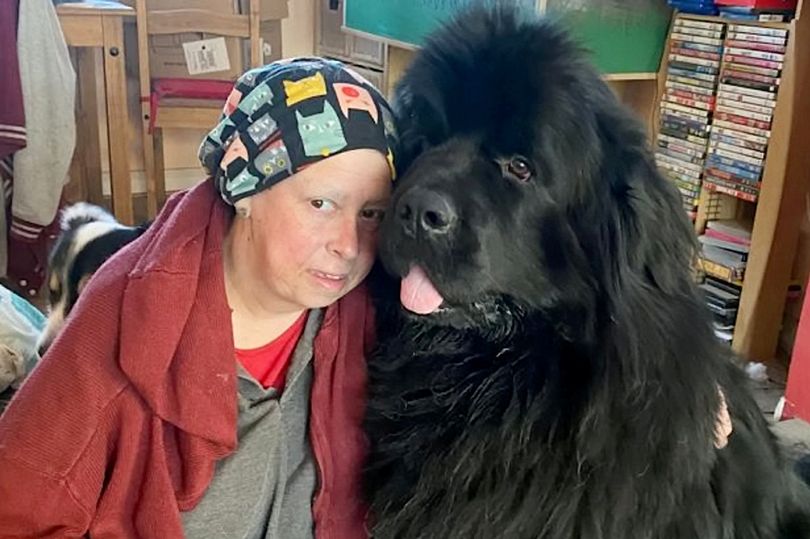
"A woman said she owes her life to a rescue dog who spotted her breast cancer after 'sniffing and nuzzling' her right armpit. Lucy Giles, 45, thought her beloved Broady was initially just craving some attention but, soon after discovering a lump in her armpit, she was diagnosed with HER2-positive breast cancer.
The animal-lover had welcomed the 11-stone Newfoundland giant into her life in July 2021 after her partner Ashley, 62, had spent six months in hospital on a life-support machine after contracting Covid. When Ashley returned home, he was dependent on Lucy, who works as a carer, and she became his full-time support.
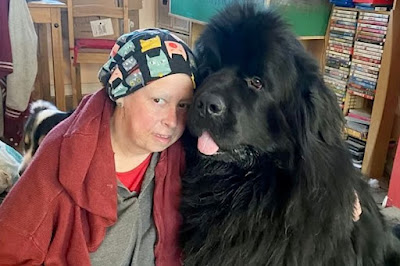 As part of his recovery, the pair decided to add to the family of pets who they dote on, including two dogs Leo and Murphy, 18 rabbits, two cats and a tortoise. They then adopted Broady the gentle giant, who was from a family who could no longer look after him.
The Newfoundland breed is well-known for water rescue and lifesaving because of their swimming abilities and intelligence and Lucy, of Didcot, Oxon, said: 'It was in the September that he started to sniff and nuzzle at my right armpit. It was mostly when I was sat down, so either watching TV or sitting down for a rest and always in the same spot on my right side.'
'At first, I thought it was him wanting a bit of fuss and attention but I decided that I should perhaps take notice as it was just my right side he would do this. I was washing myself in the shower one morning and decided to have a feel under my breasts and examine myself and that’s when I felt a lump right there in my armpit.'
As part of his recovery, the pair decided to add to the family of pets who they dote on, including two dogs Leo and Murphy, 18 rabbits, two cats and a tortoise. They then adopted Broady the gentle giant, who was from a family who could no longer look after him.
The Newfoundland breed is well-known for water rescue and lifesaving because of their swimming abilities and intelligence and Lucy, of Didcot, Oxon, said: 'It was in the September that he started to sniff and nuzzle at my right armpit. It was mostly when I was sat down, so either watching TV or sitting down for a rest and always in the same spot on my right side.'
'At first, I thought it was him wanting a bit of fuss and attention but I decided that I should perhaps take notice as it was just my right side he would do this. I was washing myself in the shower one morning and decided to have a feel under my breasts and examine myself and that’s when I felt a lump right there in my armpit.'
 Lucy was then informed to wait a month by her GP surgery as her doctor thought it could be hormone related - but the lump remained a few weeks later, and she was referred to Churchill Hospital for tests. She explained: 'The hospital called me one afternoon and asked me to come in and I had no idea what the news would be as they wouldn’t tell me over the phone.'
'The consultant said straight away that I had HER2-positive breast cancer and there was also residual cancer cells in my lymph nodes. The news hit me hard as it was the same day my nan had died from bowel cancer the year previously and I was with her when she died.'
In October last year, Miss Giles underwent six rounds of chemotherapy followed by a lumpectomy with radiotherapy afterwards. She is still going through chemotherapy as well as continuing to work full time.
Lucy added: 'I have had dark days and OK days. The chemo does make me feel poorly with mouth ulcers and some nose bleeds but I have a brilliant support network of family and friends who take me to appointments and help in just being there for me, along with Brody, of course, who perhaps came into our lives for a reason.'
Lucy is hoping to encourage others to join her in Oxford on Saturday, September 3 for this year’s Cancer Research UK Shine Night Walk - a 10km stroll to raise money for life-saving research. Alison Birkett, from Cancer Research UK, said: 'One in two of us will get cancer in our lifetime, but all of us can help beat it.
'As we mark our anniversary, we want to thank Lucy, Ashley and, of course, Broady and people across Oxfordshire for their incredible commitment to events like Shine Night Walk that make our life-saving work possible.'"
Lucy was then informed to wait a month by her GP surgery as her doctor thought it could be hormone related - but the lump remained a few weeks later, and she was referred to Churchill Hospital for tests. She explained: 'The hospital called me one afternoon and asked me to come in and I had no idea what the news would be as they wouldn’t tell me over the phone.'
'The consultant said straight away that I had HER2-positive breast cancer and there was also residual cancer cells in my lymph nodes. The news hit me hard as it was the same day my nan had died from bowel cancer the year previously and I was with her when she died.'
In October last year, Miss Giles underwent six rounds of chemotherapy followed by a lumpectomy with radiotherapy afterwards. She is still going through chemotherapy as well as continuing to work full time.
Lucy added: 'I have had dark days and OK days. The chemo does make me feel poorly with mouth ulcers and some nose bleeds but I have a brilliant support network of family and friends who take me to appointments and help in just being there for me, along with Brody, of course, who perhaps came into our lives for a reason.'
Lucy is hoping to encourage others to join her in Oxford on Saturday, September 3 for this year’s Cancer Research UK Shine Night Walk - a 10km stroll to raise money for life-saving research. Alison Birkett, from Cancer Research UK, said: 'One in two of us will get cancer in our lifetime, but all of us can help beat it.
'As we mark our anniversary, we want to thank Lucy, Ashley and, of course, Broady and people across Oxfordshire for their incredible commitment to events like Shine Night Walk that make our life-saving work possible.'"

Subscribe to:
Posts (Atom)